Journal
How we make sheftalia
At seven every morning, before the cleaners have finished and long before anyone else is in, my dad is at the steel bench by the back door making sheftalia. On a Tuesday he will make about a hundred and fifty. On a Saturday it is closer to four hundred. He has done this, give or take a heart operation, since 1991.
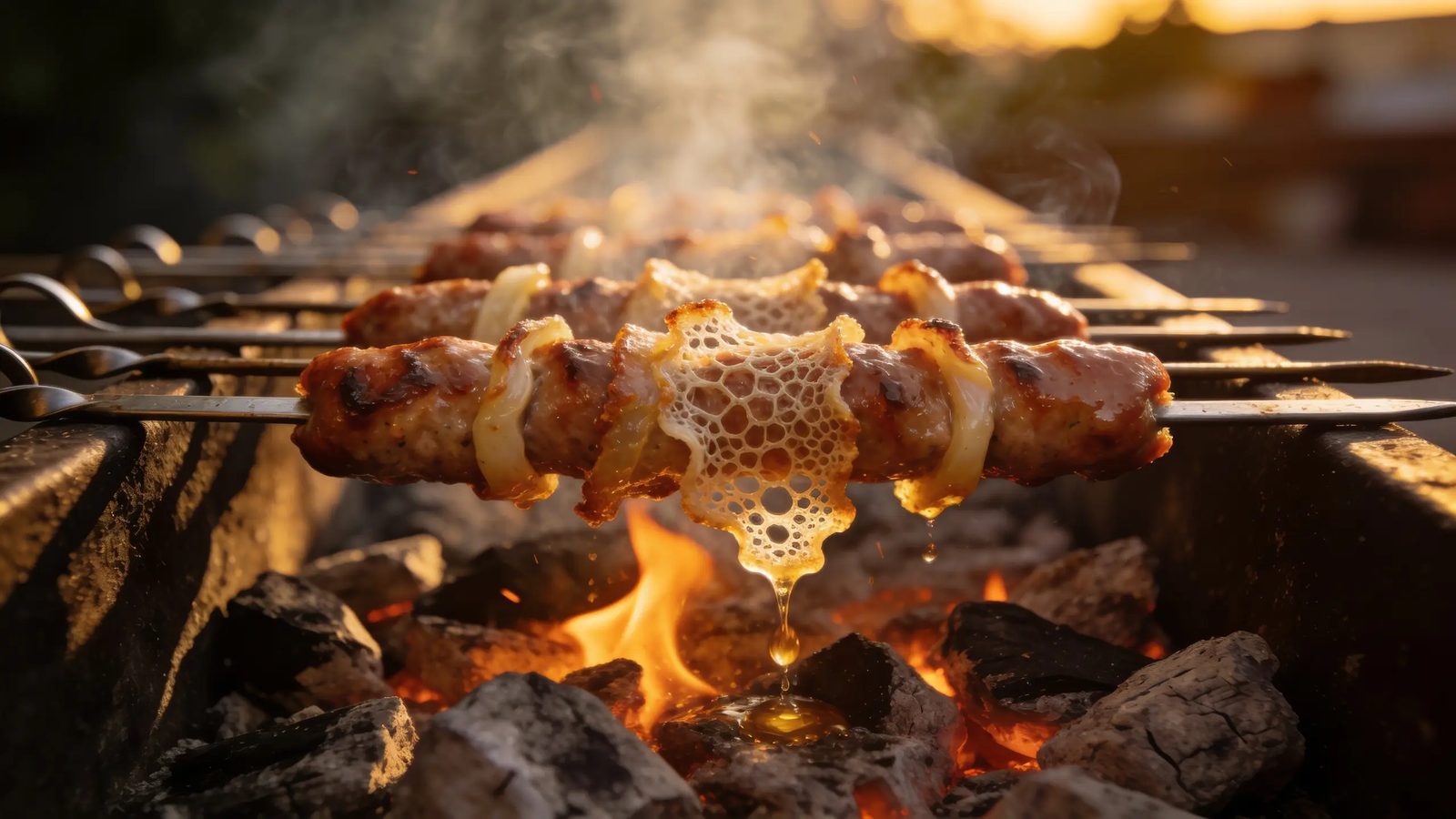
Sheftalia are Cypriot sausages without a casing. The meat is wrapped in caul fat instead, the thin, lacy layer of fat that surrounds a pig's stomach. On the grill the caul melts, bastes the meat and crisps at the edges, and whatever is left holds everything together. Most Cypriots will tell you there is only one right way to make them. Most Cypriots disagree about what it is.
The meat
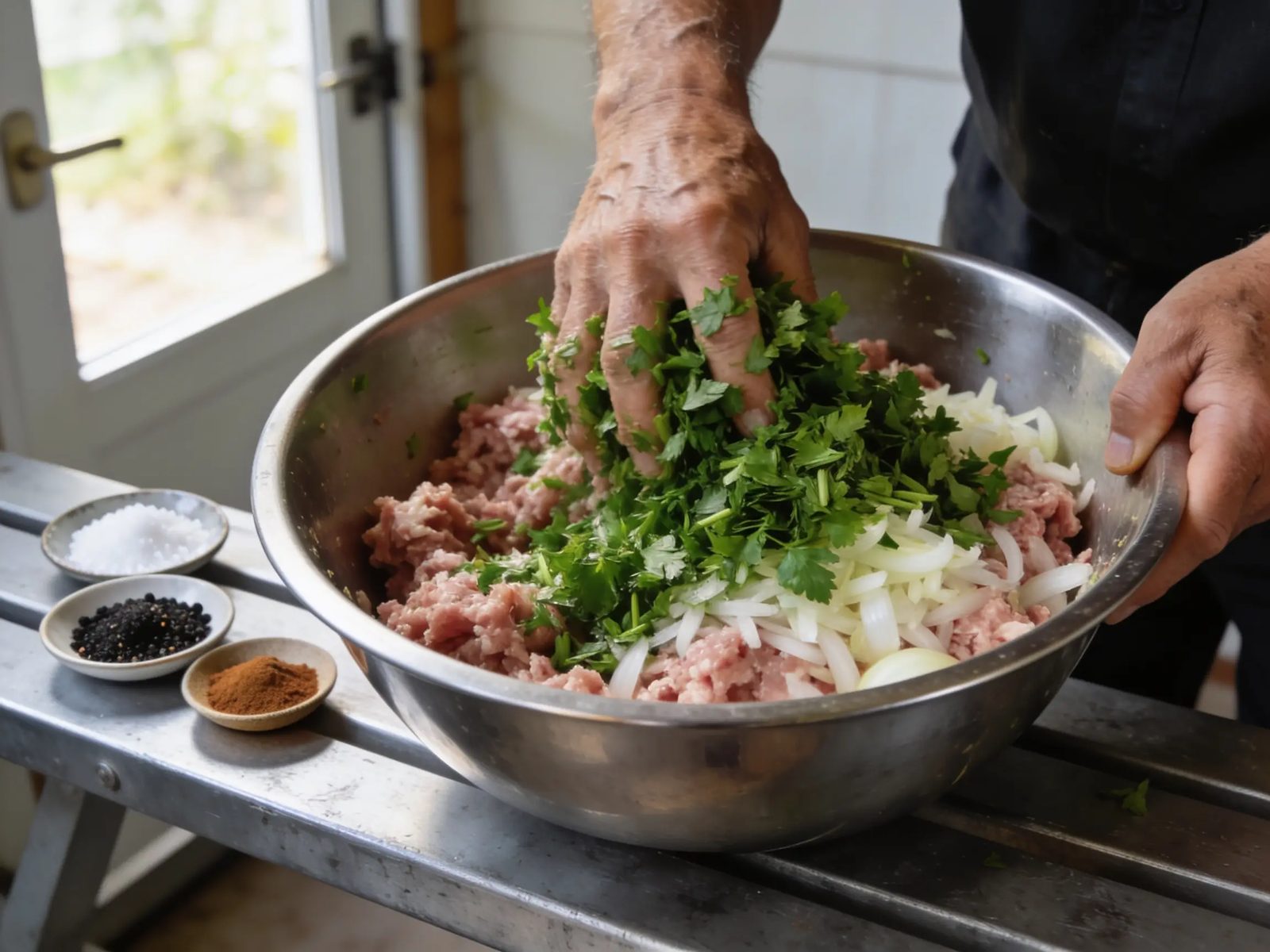
We use pork shoulder and pork belly, roughly seven parts shoulder to three parts belly. Shoulder gives flavour, belly gives the fat that keeps sheftalia juicy over charcoal. Dad minces it himself on a coarse plate, because shop-bought mince is too fine and turns dense and springy when you grill it. You want to see the texture of the meat when you break one open.
Into the mince go onion, flat-leaf parsley, salt and black pepper. The onion is grated and squeezed in a cloth first, or its water makes the mixture wet and the parcels split. The parsley is chopped fine, a lot of it, more than looks sensible. Then there is the cinnamon.
The cinnamon argument
Dad adds a pinch of ground cinnamon, the way his mother did in Kathikas. Hüseyin, who grew up on the other side of the island, thinks cinnamon belongs in desserts and says so most mornings. My mum sides with Dad. I have tasted both and I side with whoever is making them that day. The pinch stays. It is small enough that most people never notice it, which Hüseyin says proves his point.
Dad mixes everything by hand for a good few minutes, until the mince feels tacky and holds together when he squeezes it. Then it goes into the fridge for an hour. Cold mince is easier to wrap and holds its shape on the grill.
The caul fat
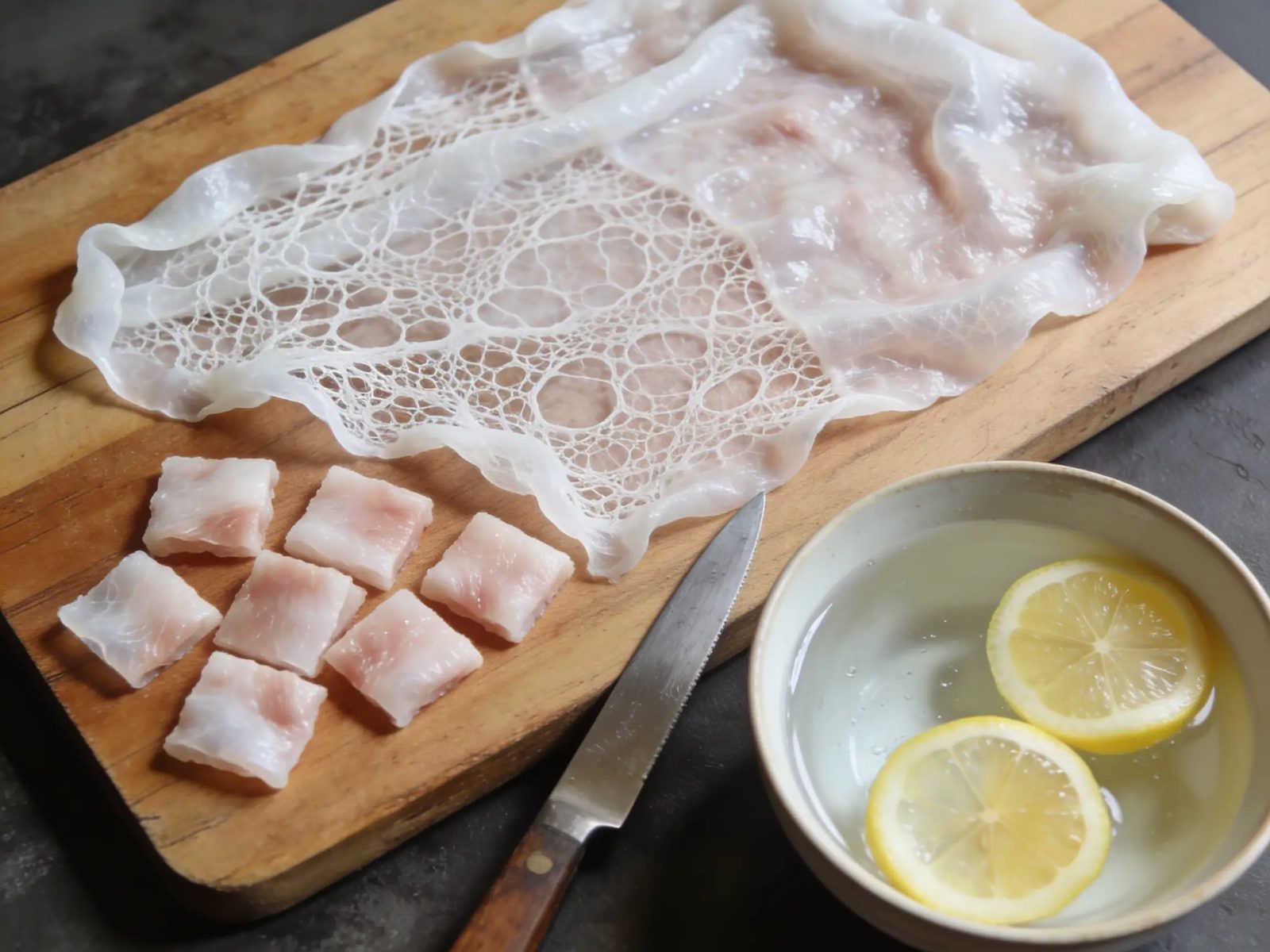
In Greek it is πάνα, and you have to ask a butcher for it; ours orders it for us from a farm in Essex. It arrives folded in tubs, and before anything else it goes into a sink of cold water with a squeeze of lemon, to rinse it and loosen it. Then Dad lifts it out a sheet at a time and stretches it over the board.
If you have never seen caul fat, it looks like lace. The first time I noticed that properly, I was about nine, and I told Dad it looked like the tablecloth my yiayia had made in Kathikas. He said that was the most Cypriot thing I had ever said.
He cuts the sheet into squares about the size of his palm. Any holes do not matter; the next layer covers them.
The wrapping
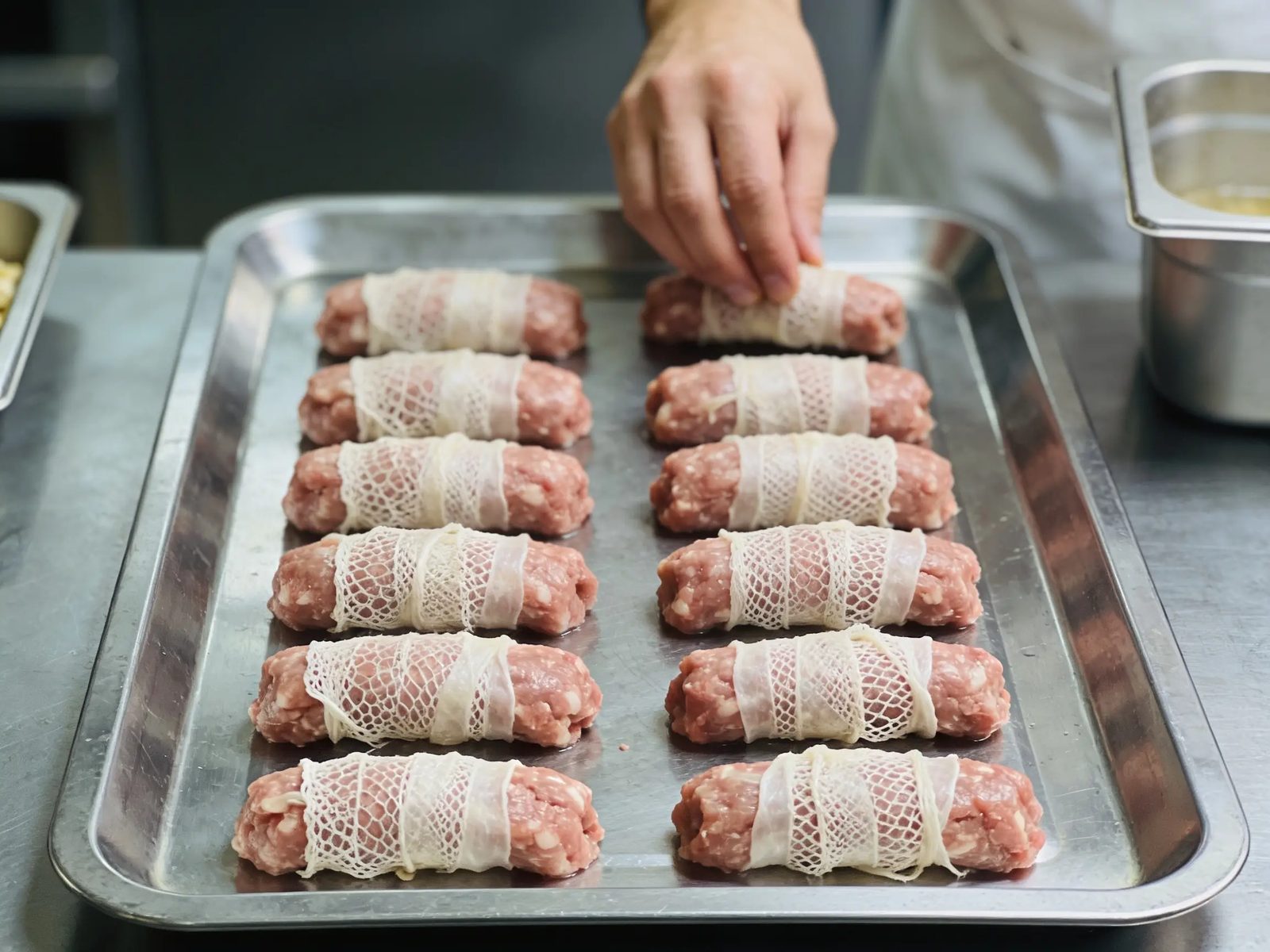
A heaped spoonful of mince, around 60 grams, goes at one edge of the square. Dad shapes it into a short, fat log with his fingers, folds the sides in and rolls it up like a parcel, finishing seam side down. Each one takes him about eight seconds. When I try, it takes me twenty, and he re-rolls about a third of mine without saying anything.
The finished sheftalia go on trays in rows of ten, back into the fridge until service.
The grill
Hüseyin threads them onto flat skewers, five to a skewer, flat so they cannot spin when the motor turns. They go on at the gentle end of the foukou, well above the coals, never where the heat is fiercest. Cook sheftalia too hot and the caul burns before the middle is done; too cool and the fat does not render and they stay pale and soft. At the right height it takes twelve to fifteen minutes, turning the whole time, until the outside is brown and crackly and the juices at the ends have stopped running pink.
Hüseyin calls them şeftali, the Turkish Cypriot name. The name probably comes from the Turkish word for peach, maybe for the colour, or from a cook called Şef Ali, depending on who is telling it. In this kitchen nobody agrees, and nobody minds.
At home
You can make these on a garden barbecue. Ask your butcher for pork caul fat a few days ahead; it freezes well. Keep the mince cold, keep the grill patient, and serve them the Cypriot way: in a warm pitta with chopped salad, a spoon of tahini and a squeeze of lemon.
Or come in and let Dad make them for you. He will have started at seven.
Sheftalia are on the menu every day we are open: five with salad and pitta for £19.50, or three in a pitta from the takeaway window for £10.50.