Why Customers Say 'We Went With Someone Else' and How to Find Out Why
Customers say they went with someone else because another firm looked easier to trust, easier to understand or easier to book, and they rarely say which. The polite text hides the reason. The fastest way to find it is to look at your quote, website and Google listing the way that customer did, then compare them with two rivals.
The ad at a glance
| Question | Answer |
|---|---|
| Who it is for | Owner-operators who send quotes and then hear nothing, or hear a short, kind refusal. |
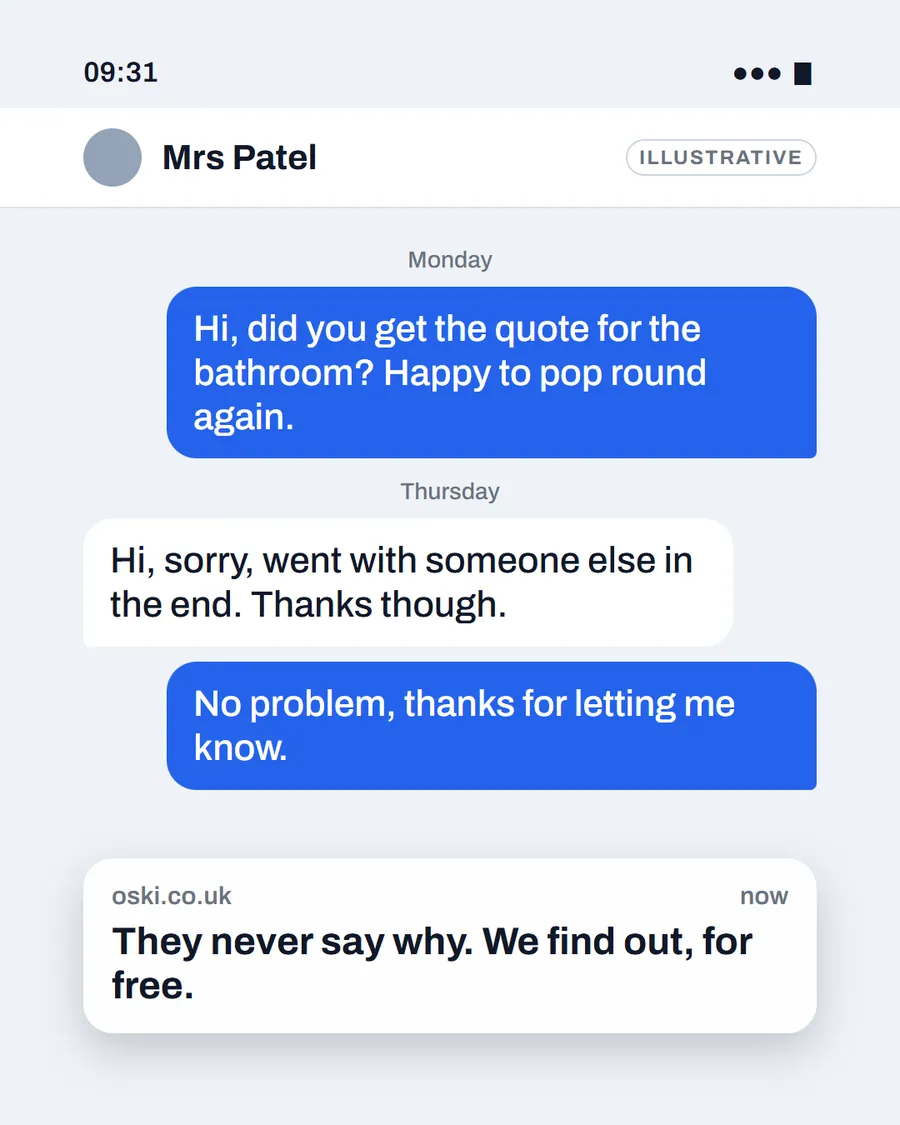
| What it shows | A text thread where a customer says she went with someone else, and a notification that reads "They never say why. We find out, for free." |
| Where it applies | Across the UK, with a focus on London and the South East, where we are based. It is aimed at small local businesses wherever customers search for them. |
| Why we published it | Every trade has received this message, and many never learn the reason. The reason is usually findable, and finding it is the first step in fixing it. |
Why do customers rarely tell you the real reason?
Because it is awkward and nobody owes you an explanation. Telling a tradesperson "your website looked dated" feels rude. "We went with someone else" is quicker and kinder. The decision was often made before they replied, and the reply is a courtesy.
That means the useful evidence is not in the message. It is in what the customer saw between your first contact and their decision: your listing, your site, your quote and how quickly you replied.
What do customers compare before they choose?
Customers often look at more firms than they ask for quotes. They check a handful of listings and websites, then ask two or three for prices. The signals they use are simple:
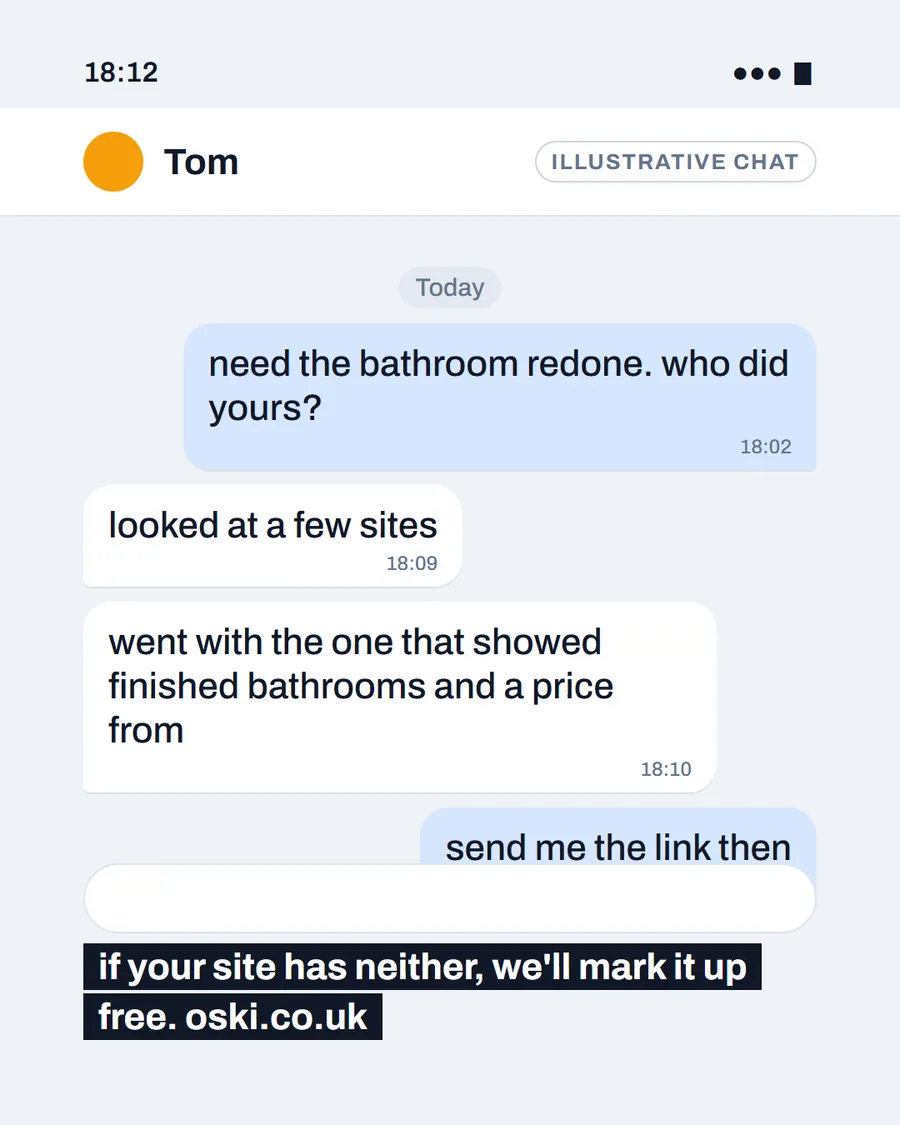
- Proof of work. Real photos of finished jobs, not stock images.
- Clarity of price. A starting price or a clear explanation of how you charge.
- Reviews that look recent. A newest review from last year looks like a firm that has stopped trading.
- Speed and ease of reply. Who answered first and who made it easy.
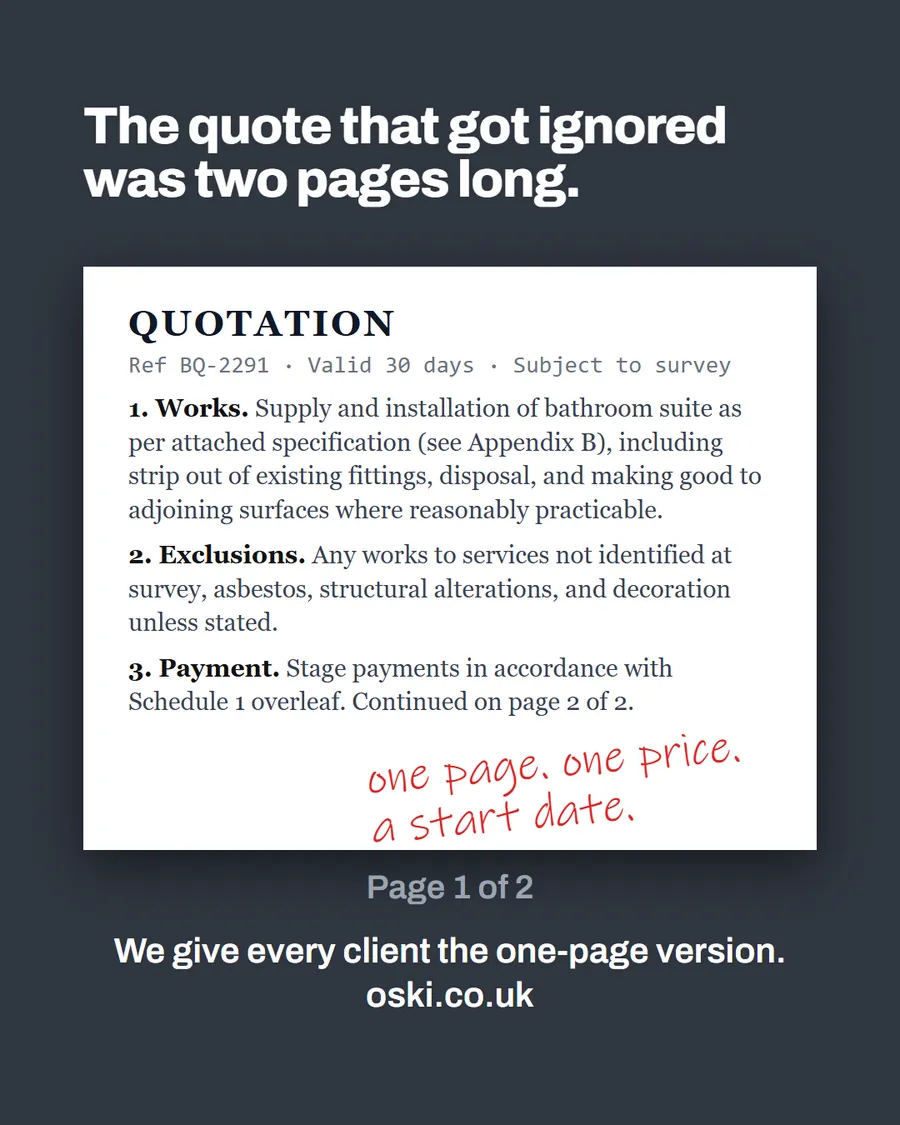
- A quote they can read quickly. Short, specific and dated.
We go through the first two in why customers pick the tradesperson whose website shows photos and a price and the last in how long a quote should be.
How do you find out why you lost the job?
Run this short review on a quote you lost:
- Open your Google listing on a phone. Count the recent photos and the date of the newest review.
- Open your homepage on a phone. Does the first screen say what you do and where?
- Read your quote as the customer would. Is the price, the start date and what is excluded obvious in ten seconds?
- Search for two competitors. Note what their listings and sites show that yours does not.
- Check your reply time. How long did the customer wait for your first answer?
Write down the gaps. The same two or three will probably appear across several lost quotes.
Should you ask the customer directly?
Once, briefly, and without pressure. A message like this works:
"Thanks for letting me know. If you have a moment, was there anything about the quote or our website that made the other firm easier to choose? It helps us improve. No problem if not."
Do not offer a discount, do not argue and do not message again. If they reply, you will learn something. If not, you have lost nothing. Where the answer involves price, remember that a "from" price on your website is an advertising claim, and the ASA's guidance on prices says price statements must not mislead. Keep any starting price honest.
Does Google care about the same things?
Partly. Google says local results are based mainly on relevance, distance and prominence, and that businesses with complete and accurate information are more likely to appear. Its local ranking help page lists accurate hours and complete details as part of that. A customer will notice the same gaps that Google does, such as missing hours or an empty photo section.
What should you change once you know the reason?
Match the gap you found to the fix that takes the least effort:
| What you found | Quick fix |
|---|---|
| No recent photos on the listing or site | Add five photos of finished jobs this week |
| No price anywhere | Add a starting price or an honest explanation of how you quote |
| Newest review is old | Ask your last five happy customers for a review |
| Slow first reply | Set up a quick auto-reply and a reminder to answer within the hour |
| Long, hard-to-read quote | Cut it to one page with the price and start date at the top |
| Homepage does not say where you work | Put the town in the first line |
Fix one thing at a time and see whether the next quote goes differently. Changing everything at once makes it impossible to tell what worked.
How do you stop it happening again?
Keep a simple lost-quote log. A spreadsheet or a notebook will do. After every "we went with someone else", write the date, the job type, the price you quoted and anything you noticed about your own listing or site at the time. After five or six entries, patterns appear. If four of them mention price, that is where to focus. If none do, price is probably not the problem.
Treat it as information, not as rejection. A customer who says "went with someone else" has told you the decision was close enough that small things mattered, and small things are the ones you can change.
What to do this week
- Pick the last quote you lost and run the five-step review above.
- Write down the two biggest gaps between your listing and your best competitor's.
- Fix the one that takes the least time, usually photos or hours.
- Send the one-line follow-up message to your last three lost quotes.
- If you would like us to do the comparison for you, send us your website and listing and we will tell you what a customer sees.
Frequently asked questions
Why do customers say they went with someone else?
Usually because another firm looked easier to trust, easier to understand or easier to book. Customers rarely give the real reason, so the reply is polite and short. The cause is often on your website, listing or quote, not in how you spoke to them.
Should I ask a customer why they chose someone else?
Yes, once, politely, and only if you accept that they may not answer. Keep it to one question and make it easy to reply to. Never argue with the answer or offer a discount to win them back.
How soon should I follow up on a quote?
A few days after sending it is reasonable, with one short message. If there is no reply after that, leave it. Repeated chasing tends to push people towards the firm that did not chase.
Can I find out why I lost a job without asking?
Partly. Look at your quote, website and Google listing as the customer saw them. Compare them with two competitors. The gaps you notice, such as missing photos, no price or old reviews, are the likely reasons.